

How To Repair Cracks In Cinder Block Foundation
Repairing Cracks in a Cinder Block Basement
Manufacturers cast cinder block, also known every bit concrete masonry units, from pumice or clay and concrete to grade a lightweight, hollow block. Cracks in basement walls allow water to enter the basement, which leads to mold and mildew growth.
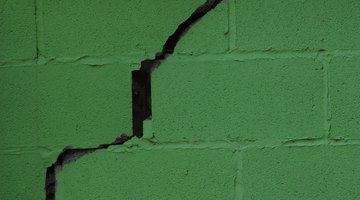
Salvage coin by repairing cracked cinder blocks yourself.
Filling a small and moderate crack is necessary to prevent unhealthy conditions in the dwelling house. Large, unstable or growing cracks require a professional inspection to determine the structural stability of the basement earlier filling.
- Safety glasses
- Gloves
- Wire brush
- Shop vacuum
- Dish detergent
- Saucepan
- Nylon scrub brush
- Rag
- Concrete crack-filler
- Utility pocketknife
- Masonry cold chisel
- Masonry hammer
- Fast-setting hydraulic cement
- Dispensable gloves
- Pointed trowel
Tip
Continue notes on the length and width of cracks to decide if they are spreading, which tin can signal a structural problem. Cracks wider than 1/2 inch crave close monitoring.
Alarm
Wear safety glasses and gloves when working with cinder block cracks.
Dry out Cracks
-
Choice out loose pieces of mortar past mitt. Brush the cleft with a wire brush to piece of work loose and remove excess mortar. Vacuum the debris out of the crack with a shop vacuum.
-
Add 1/ii gallon of water and 1 to 1 1/2 teaspoons of dish detergent to a bucket. Dip a nylon scrub castor into the cleaning water and scrub the crack to remove grit, debris and dirt. Dry the scissure with a rag and let the crack dry for i to two hours.
-
Cutting the tip off a bottle of ready-to-use concrete crack-filler with a utility pocketknife.
-
Insert the tip of the bottle into the cider block crack. Squeeze the bottle while moving information technology along the length of the fissure, filling information technology until information technology is affluent with the cinder cake surface.
Weeping Cracks
-
Identify a masonry cold chisel forth the line of the fissure and hit the handle with a masonry hammer to flake off excess mortar and even the edges of the crevice. Hold the chisel at an bending to the wall to undercut or chip into the crack and giving the hydraulic cement a shelf on which to sit.
-
Remove loose pieces of mortar past manus. Rub the cleft vigorously with a wire brush to loosen and remove mortar from the interior of the crevice. Vacuum the cinder block scissure with a shop vacuum to remove loose mortar, clay and droppings. Scrub the crack with soapy water and rinse with articulate water to remove excess dirt and oils.
-
Mix fast-setting hydraulic cement with water co-ordinate to the manufacturer'due south instructions. But mix plenty hydraulic cement that you can use within three to four minutes. Hydraulic cement sets speedily and cannot be reactivated with h2o.
-
Put on thin, disposable gloves. Curl the hydraulic cement between your palms until information technology is warm, making a thick serpent-similar strip.
-
Place the hydraulic cement into the fissure and pack information technology in with your fingers. Employ the tip of a pointed trowel to smooth and flatten the hydraulic cement patch. Keep to mix, roll and pack the crevice until hydraulic cement fills all weeping cracks.
The Drip Cap
- Manufacturers cast cinder block, too known as concrete masonry units, from pumice or clay and concrete to form a lightweight, hollow block.
- Filling a pocket-sized and moderate scissure is necessary to prevent unhealthy atmospheric condition in the home.
- Selection out loose pieces of mortar by hand.
- Brush the crack with a wire brush to work loose and remove excess mortar.
- Vacuum the cinder block cleft with a shop vacuum to remove loose mortar, dirt and droppings.
- Put on thin, dispensable gloves.

How To Repair Cracks In Cinder Block Foundation,
Source: https://homesteady.com/13403173/repairing-cracks-in-a-cinder-block-basement
Posted by: waldensheophy83.blogspot.com
0 Response to "How To Repair Cracks In Cinder Block Foundation"
Post a Comment